
Hunger, Work, and Human Dignity
Promise at DawnThis thread traces the narrator’s encounters with hunger and dependence, and the belief that food should never be conditional on submission.
increasing Bearing strength in each event
 decreasing
Bearing strength in each eventdecreasingA Mother Goes Without
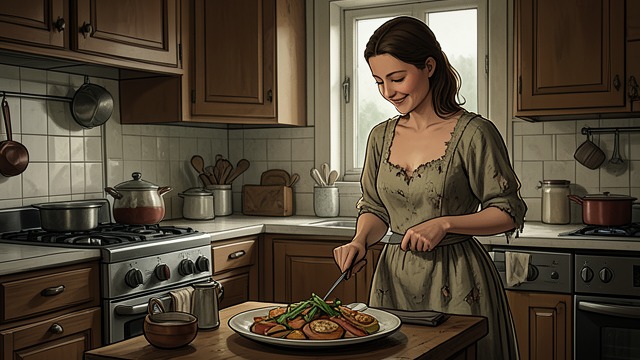
A Mother Goes Without
The meal he receives
His mother regularly serves him steak while claiming that she cannot eat meat. He later discovers her secretly eating the cooking fat with bread.
Poverty made intimate
The discovery reveals the cost of her care and turns financial hardship into a personal moral shock. He resolves that he must one day support her.
A Student’s Empty Stomach
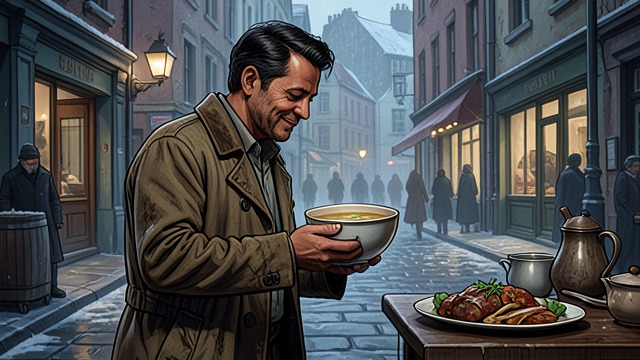
A Student’s Empty Stomach
Hunger and shame
Unable to afford food, the narrator walks across Paris hoping friends will invite him to dinner. When they are absent, he faints outside a restaurant.
A political conclusion
He reads the incident as evidence that no person should need permission or submission in exchange for bread. Hunger becomes a test of social justice.
The Croissant Scholarship

The Croissant Scholarship
A waiter’s generosity
At the Capoulade, the narrator eats several croissants while paying for very little. Jules recognizes the deception but continues to feed him.
Help without humiliation
The arrangement sustains a poor student without turning generosity into a lecture. The narrator remembers it as evidence that ordinary people can offer practical kindness.
The Defeated Soldier’s Meals
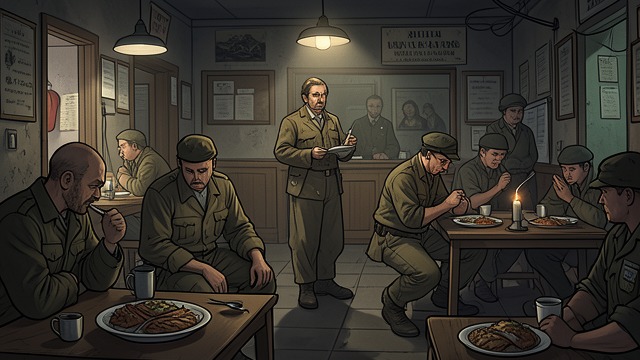
The Defeated Soldier’s Meals
Food amid collapse
The narrator encounters soldiers in a brothel district and sees bodily appetite intensify under military defeat. Food and sex appear as immediate responses to fear and humiliation.
Looking beyond judgment
He resists reducing people to conventional moral categories. The scene reinforces his belief that dignity must be sought in the heart and spirit, not merely in conduct.
A Moral Measure
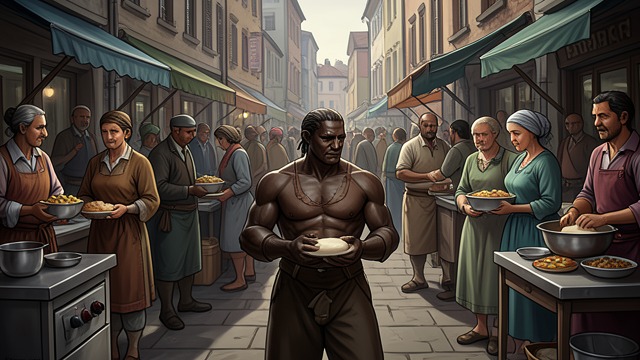
A Moral Measure
Politics judged by bread
The narrator evaluates political regimes by whether they can guarantee nourishment to every person. Food becomes a measure of freedom rather than a private comfort.
Refusal of coercion
He condemns systems that make daily bread dependent on obedience. His position grows out of personal hunger and the memory of dependence.
During his childhood in Nice
During his early years in Paris
During the years before the war
June 1940 in North Africa
In later reflections
